WALT: Use our basic facts knowledge to solve problems.
This week we are doing maths.
Whaea Reawyn has set some task for us to do.
One of them is a crossword and we have to solve the equation to solve the crossword.
For example one of the questions was 8 + 7 + 6 + 9 + 11 + 13 + 7 + 11 and we have to figure it out then write the answer on the paper
The other task was we have to do ten equations every day.
This is what we did
I am a student at in Uru Mānuka. In 2020 I was a year 8 and in 2021 I will be a year 9. This is a place where I will be able to share my learning with you. Please note....some work won't be edited - just my first drafts, so there may be some surface errors. I would love your feedback, comments, thoughts and ideas.
Friday, May 3, 2019
Thursday, May 2, 2019
white powder
Today you will be a Forensic Chemist.
A bag of white powder has been confiscated by the airport customs. You need to find out what white powder it is?
Aim: To learn about the makeup of different white powders.
There are a number of different white powders in our everyday life. Some of these are harmful and others are not. Test the four white powders listed to see which one has been found at the airport.
Here are some examples of everyday kitchen white powders.
Flour, Cornflour, Sugar, Salt, Baking Soda, Baking Powder, Icing Sugar, Tartaric Acid
Citric Acid, Gluten Free Flour
You will be given a small amount of 4 white powders on your cardboard. On the black cardboard using a magnifying glass look at the powders.
Look at them under your magnifying glass and record what you see.
1. Cornflour
2. Baking Soda
3. Salt
4. Sugar
Before you add the iodine, vinegar or water you will need to divide each powder into 3.
1. Iodine
2. vinegar
3. water
4. pipette
5. baking soda
6. salt
7. sugar
8.corn flour
Steps
1 fold cardboard into four unfold it
2. name each box salt baking soda sugar and cornflour
3. separate the white powders into 3s
4. add three drops of iodine and water and vinegar into the white powders
5.
6.
Sugar
|
Salt
|
Baking Soda
|
Cornflour
| |
Appearance
| ||||
Texture
| crystals | small | tiny | chunky |
Smell
| nothing | nothing | nothing | nothing |
Iodine
| hardens | hardens | hardens | hardens |
Water
| wet | hardens | hardens | hardens |
Vinegar
| wet | hardens | fizzes harden | hardens |
Conclusion:
We found out how the white powder would react.
the sugar texture was like crystals, it smells like nothing when it gets in contact with the iodine it hardens. when it also touches water and vinegar it just gets wet.
For the salt, it is the same thing as the sugar but the texture is small.
The baking soda texture is tiny and it smells like nothing it hardens when it gets in contact with the iodine, water and it fizzes and hardens when it gets in contact with the vinegar.
For the cornflour, it is the same thing as the salt but the texture is chunky.
Monday, April 29, 2019
Aerodynamics
FLIGHT
Aim: To learn about flight and aerodynamics.
- In your groups of 3, you will make a paper plane and measure its distance and behaviour.
- In groups of 3, you will make a water rocket and record its distance and behaviour.
Aerodynamic is a thing that moves in the air.
A solid object that which air flows around.
4 forces of flight:
- Gravity
- Thrust
- Lift
- Drag
Paper Plane:
Material:
1. Paper
2.ruler
Steps:
1. fold in half long side
2. make the wings
3. cut ailerons
Findings:
Conclusion:
We learnt how to make a different paper plane. We found out what Aerodynamics is and the 4 forces of flight. We also found out that the difference makes when we put the paper clip and the ailerons.Material:
1. Paper
2.ruler
Steps:
1. fold in half long side
2. make the wings
3. cut ailerons
Findings:
Plane Type
|
Distance
|
Behaviour
|
Normal
| 4.6 M | straight then curved at the end |
Ailerons
| 2.1 M | curved |
| Paper clip | 5 M | straight line |
Conclusion:
The different tests that we did are paper plane without the ailerons and the paperclip, paper plane with the ailerons and lastly paper plane with paper clip.
Friday, April 12, 2019
Change and Challenges
The 5 drama games that we played was two truth and a lie,
follow the leader, copy dancing, freeze frame and tranquil
Described 1 game in detail: what we did and what skills we learned.
One of the games that we played was 2 truths and a lie.
you have to find a partner and tell them 2 truths and one lie.
for example
1. there are five people in my family
2.i like to play basketball
3. I have three brothers
number three is a lie. your partner has to find out which one is a lie.
I would like to play Ten Second Objects.
Included the 4 aspects of hauora.
Taha tinana - Physical well-being
Taha hinengaro - Mental and emotional well-being
Given an example of each aspect of Hauora

Thursday, April 11, 2019
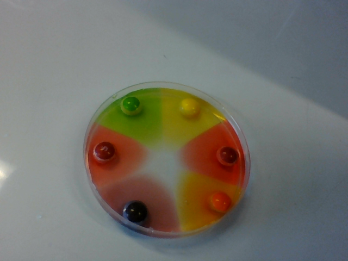
skittles
skittles
Aim: To separate colours from Skittles by using chromatography.
Materials:
Skittles.
Petrie dish.
Water.
Process:
Step 1: Get a Petrie dish.
Step 2: Put Skittles in the outer rim of the Petrie dish.
Step 3: Put water.
Conclusion: What have I learnt from this experiment?
I have learnt what a Petrie dish is.
I have also learnt that when Skittles touch the water the colour of the Skittles start to come off and it mixes with the water.
Tuesday, April 9, 2019
100 word challenge
...But it is the wrong colour...
On an ordinary day, a girl named Felicia Wise was walking around the mall when she saw an article for a Tesla. She immediately called her Dad and asked him if he can get her a Tesla for her birthday, her Dad said yes, she continued to look around the mall and went home. A few hours later she got a big blue gown.
Months have gone past it was her 16th birthday. Felicia asked her Dad “Where is my car?” her Dad told her to come outside, there was her car. Felicia screamed but it was the wrong colour.
Monday, April 8, 2019
Rainbow Paper
Rainbow Paper
Aim: To separate colours by using the process of chromatography.
Materials:
1. Filter Paper
2. Water-based felt pen
3. Cup
4. Water
Process:
Step 1: Get a filter paper.
Step 2: Measure 1cm.
Step 3: Draw a line in the 1cm mark.
Step 4: Get a water based felt pen and draw to dots.
Step 5: Put the paper and make sure the line that you made in not touching the bottom of the cup.
Step 6: Fill the cup with a little bit of water.
Conclusion: What have I learned from this experiment?
I have learnt from this experiment is how Forensics is so important because it can solve a crime.
I have learnt that Forensics can be Fingerprints, DNA, Ballistics, Footprints, Forgery, Genealogy and Appearance.
What I found out about the paper it is not only called filter paper but it is also called Chromatography paper.
Subscribe to:
Posts (Atom)